




Cape Verde at World Cup 2026: Small Nation, Big Statement
Cape Verde arrived at the 2026 World Cup as a debutant, but they did not play like a guest. They played like a team that understood exactly who it was.
Three group matches. Three draws. No defeat. A place in the Round of 32.
Then came Argentina.
The scoreline says Cape Verde lost 3-2. The tournament record says Argentina advanced. But the memory of that night says something else too: Cape Verde left the World Cup not as a novelty, not as a footnote, but as one of the defining underdog stories of the expanded tournament. Argentina survived Cape Verde, then Egypt and Switzerland on the way to a semifinal against England, a run repeatedly shaped by suffering and narrow margins.
For a country of around 500,000 people, this was already historic. But Cape Verde’s World Cup run was never built only on romance. It was built on structure, discipline, goalkeeping, emotional control and moments of real attacking quality.
One of those moments became an instant memory: a Cape Verde wonder goal against Argentina, the kind of strike that makes a tournament feel bigger than the bracket. It did not change the final outcome. It changed the feeling of the story.
Quick Answer: What Made Cape Verde’s World Cup 2026 Run Special?
Cape Verde reached the World Cup 2026 knockout stage unbeaten in Group H, drawing with Spain, Uruguay and Saudi Arabia before losing 3-2 to Argentina in the Round of 32. Their run was built on compact defending, Vozinha’s leadership, quick attacking breaks and one unforgettable goal against Argentina that will live as one of the tournament’s great highlights.
Cape Verde World Cup 2026 Results
| Match | Result | Key Meaning |
|---|---|---|
| Spain vs Cape Verde | 0-0 | Cape Verde proved they could survive elite pressure |
| Uruguay vs Cape Verde | 2-2 | Their first World Cup goal and biggest emotional statement |
| Cape Verde vs Saudi Arabia | 0-0 | The result that confirmed their Round of 32 place |
| Argentina vs Cape Verde | 3-2 | Cape Verde went out, but not quietly |
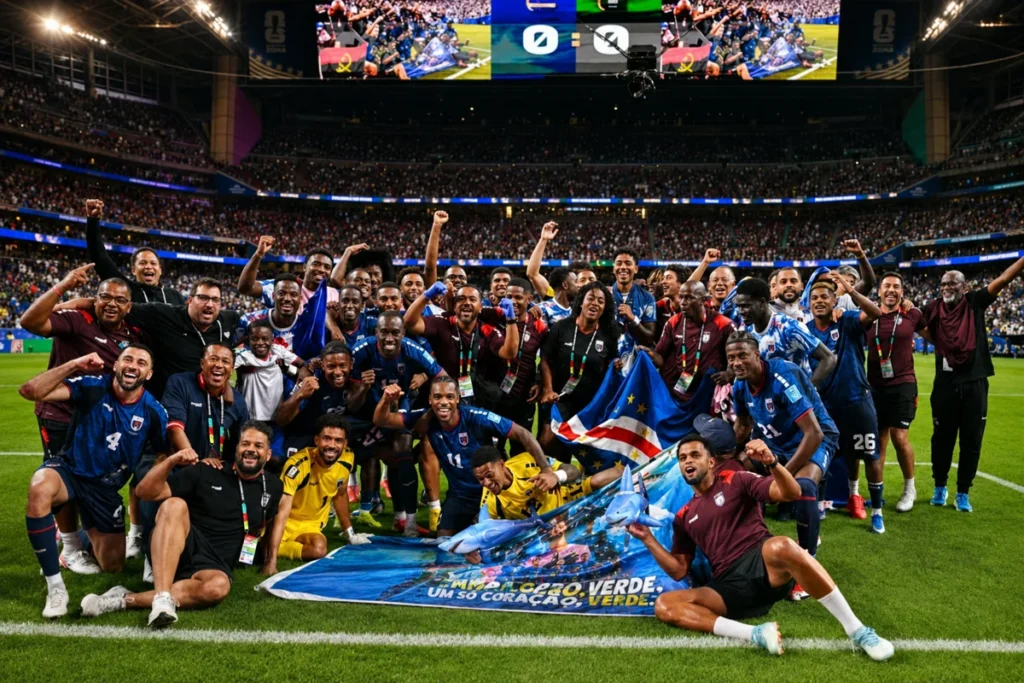
Cape Verde’s World Cup Run Was Not a Fluke
It is easy to call Cape Verde a fairytale. It is harder, and more accurate, to call them a serious tournament team.
They did not overwhelm opponents. They did not play fantasy football. They did not control matches in the traditional sense. Instead, they controlled the terms of chaos.
Against Spain, they defended deep, protected the spaces between the lines and made elite possession look less dangerous. Against Uruguay, they showed they could suffer, score, respond and stay alive. Against Saudi Arabia, they carried the emotional weight of qualification without losing their shape.
Then, against Argentina, they showed something even more valuable.
They showed they could be hurt by greatness and still answer it.
That is the part that makes this run different. Many underdogs survive until the first elite knockout opponent arrives. Cape Verde did more than survive. They made Argentina uncomfortable. They scored twice. They forced the world champions to feel the match, not simply manage it.
That is not luck. That is tournament maturity.
The Goal That Will Outlive the Result
Every World Cup story needs one image, one sound, one moment that does not require explanation.
For Cape Verde, the Argentina match gave them that.
The goal was not just important because it went in. It was important because of how it felt. It was a release of everything Cape Verde had carried through the tournament: the debut, the pressure, the doubts, the small-nation label, the sense that they were supposed to be grateful simply to be there.
Instead, they produced a goal worthy of the biggest stage.
It was the kind of strike that belongs in a tournament highlights reel: clean, sudden, brave and beautiful. An evrogol in the old football language. A goal that did not ask permission from the opponent’s status.
Argentina still won. Argentina still advanced. But Cape Verde got their permanent moment.
The Tactical Shape Behind the Story
Cape Verde’s basic idea was simple: protect the middle, keep the back line connected, then attack quickly when the ball was recovered.
At times they looked like a 4-1-4-1. Without the ball, it often became closer to a compact 4-5-1. The exact shape mattered less than the distances between players.
The midfield did not jump out wildly. The centre-backs were not dragged too far into wide areas. The full-backs picked their moments. The first job was always to make the opponent play through traffic.
That is why Spain found the opening game so awkward. Cape Verde did not try to out-pass Spain. They tried to make Spain’s possession less dangerous. The ball could move, but the best zones were guarded.
Against Argentina, that same idea was tested more brutally.
Argentina had the players to find small spaces. They had the patience to move Cape Verde from side to side. They had the individual quality to punish tiny mistakes. But even then, Cape Verde’s structure did not collapse.
That mattered. A weaker team can lose by the scoreboard and still win respect through the way it stays connected.
Cape Verde did that.
Vozinha Was the Face of the Run
Vozinha was not just part of the Cape Verde story. He became almost the symbol of it.
For a deeper look at his clean sheets, age-defying performances and role in this historic run, read our full feature on Vozinha: Cape Verde’s World Cup Hero.
At 40, he gave the campaign an emotional centre. Against Spain, he became the wall Cape Verde needed. Against Saudi Arabia, he remained the calm presence behind a team trying to carry history without panicking.
There is something powerful about that. A small nation’s first World Cup, led from the back by an old goalkeeper who understood that every save carried more than one match.
But Cape Verde did not survive only because of Vozinha. That would be too simple.
He was crucial, but he was also protected by a team that understood the value of every metre.
Why Cape Verde Were So Difficult to Play Against
The hardest opponents in tournament football are not always the strongest. Sometimes they are the teams who force you to become impatient.
Cape Verde did that very well.
They slowed the emotional rhythm of matches. They made stronger teams restart attacks. They accepted long periods without the ball. They did not treat every clearance as a failure.
That is why their group-stage draws felt bigger than the numbers.
A 0-0 against Spain was not only a point. It was proof that Cape Verde could live inside elite pressure.
A 2-2 against Uruguay was proof that they could respond after being hurt.
A 0-0 against Saudi Arabia was proof that they could handle the weight of expectation.
And the 3-2 defeat against Argentina was proof of something else: Cape Verde could lose and still leave with their football dignity enlarged.
Argentina Won, But Cape Verde Changed the Match
Argentina’s path after Cape Verde only made that Round of 32 match look more impressive.
The world champions later beat Egypt 3-2 and Switzerland 3-1 after extra time, continuing a campaign defined by pressure, comebacks and survival. By the time Argentina reached the semifinal against England, Cape Verde no longer looked like a soft early knockout opponent. They looked like the first warning sign that Argentina’s title defence would be hard.
That matters for Cape Verde’s legacy.
They did not catch Argentina on an easy night and disappear. They were part of a pattern. They were one of the teams that made Argentina suffer.
For a debutant nation, that is no small thing.
The Bigger Meaning of Cape Verde’s World Cup
Cape Verde’s run matters because it says something about the expanded World Cup.
Some feared 48 teams would dilute the tournament. Cape Verde offered the counterargument. They did not lower the level. They widened the story.
This is what the World Cup can still do better than any competition in football. It can take a team most casual viewers barely know and turn them into a global conversation within two weeks.
It can take a goalkeeper near the end of his career and make him a tournament hero. It can take a small island nation and put it on the same pitch as Argentina. It can remind everyone that football is not only about market value, club status or familiar flags.
Cape Verde did not win the World Cup.
They did not even win a match.
But they drew with Spain. They drew with Uruguay. They reached the knockouts. They pushed Argentina. They scored one of the goals people will go back to when they remember this tournament.
That is the point.
World Cup history is not only written by the teams that lift the trophy. Sometimes it is written by the teams that arrive with little noise, refuse to be embarrassed and leave behind a feeling.
Cape Verde did that.
For Cape Verde, this World Cup began as history.
It ended as belief.
Final Verdict
Cape Verde’s World Cup 2026 run should not be remembered as a cute underdog paragraph.
It deserves more than that.
This was a debut campaign with tactical clarity, emotional intelligence and genuine quality. Vozinha gave it a face. The unbeaten group stage gave it credibility. The Argentina match gave it drama. The wonder goal gave it permanence.
Cape Verde came to the World Cup as a small nation.
They left as one of its biggest stories.
Sources


