



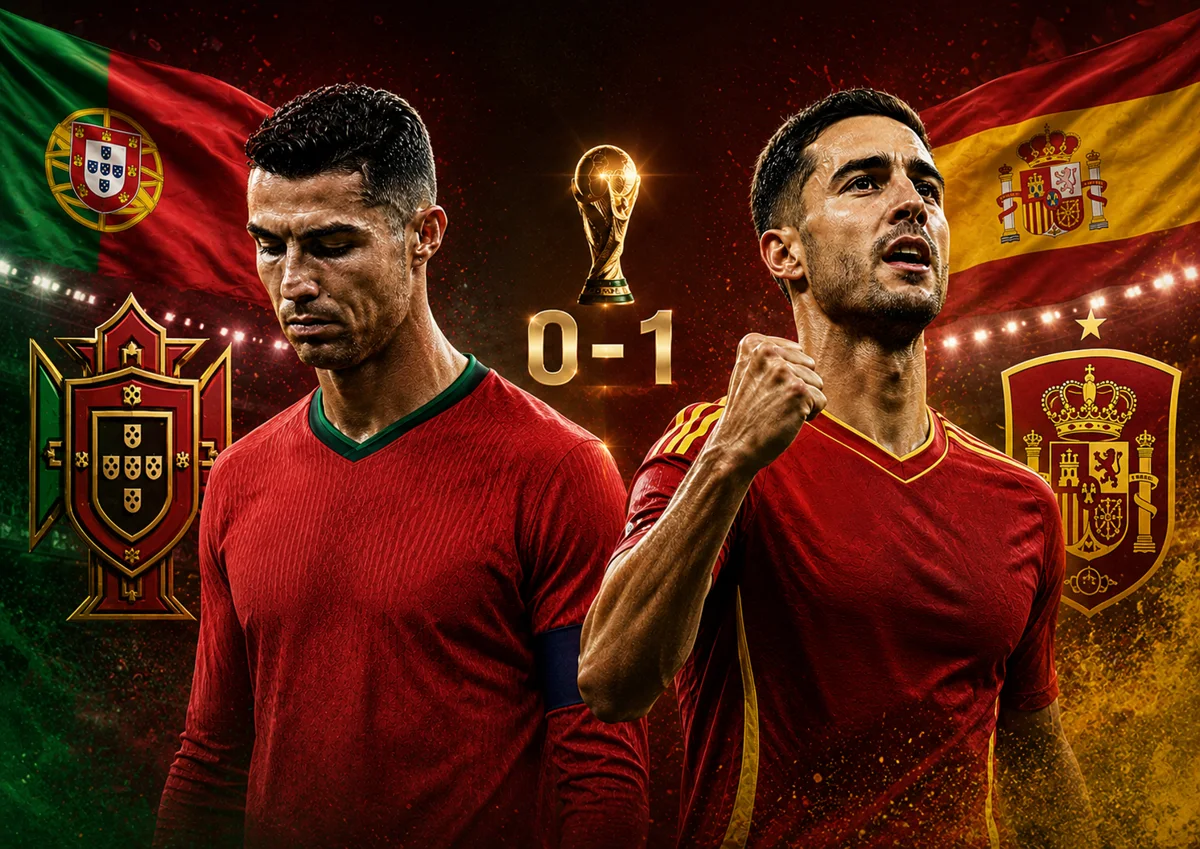
Portugal 0-1 Spain: Merino Sends La Roja Into Quarterfinals
Spain did not need a beautiful night. They needed one clear moment.
For most of the evening in Dallas, Portugal made the Iberian derby narrow, hot, tense and difficult. They blocked the lanes into Lamine Yamal, slowed Spain’s rhythm and turned the match into a test of patience rather than style.
Then Mikel Merino arrived.
In the first minute of stoppage time, Ferran Torres helped unlock Portugal with a clever late free-kick routine, and Merino attacked the decisive space. One touch, one finish, one knockout blow.
Portugal 0-1 Spain. La Roja are into the World Cup quarterfinals. Cristiano Ronaldo’s World Cup dream is almost certainly over.
This was not Spain at their most spectacular. It was Spain at their most serious.
Merino Turns A Tight Game Into A Spanish Statement
Merino’s goal felt sudden, but it did not come from nowhere.
Spain had spent much of the second half forcing Portugal deeper. The match stats backed up that feeling: Spain finished with 55% possession, 15 shots to Portugal’s 10, six shots on target to two, seven corners to three, and three big chances to one.
It was not domination in the old Spanish sense. This was not endless passing for control alone. It was pressure by position.
Spain kept asking Portugal to defend one more action, one more second ball, one more wide attack, one more run from midfield.
Eventually, Portugal broke.
Merino gave Spain the kind of goal that wins knockout matches. It was not a move built on chaos. It was built on timing. Ferran Torres saw the opening. Merino read it before Portugal reacted. The finish was calm, almost cold.
That is the danger with this Spain team. They can look patient, even quiet. Then the game changes in one movement.
For more on how Spain reached this point, Soccer Herald’s earlier look at Spain’s 3-0 win over Austria already showed the pattern: La Roja do not always need chaos to hurt teams. They need control, width and one runner arriving at the right time.
Why Portugal Made It So Difficult
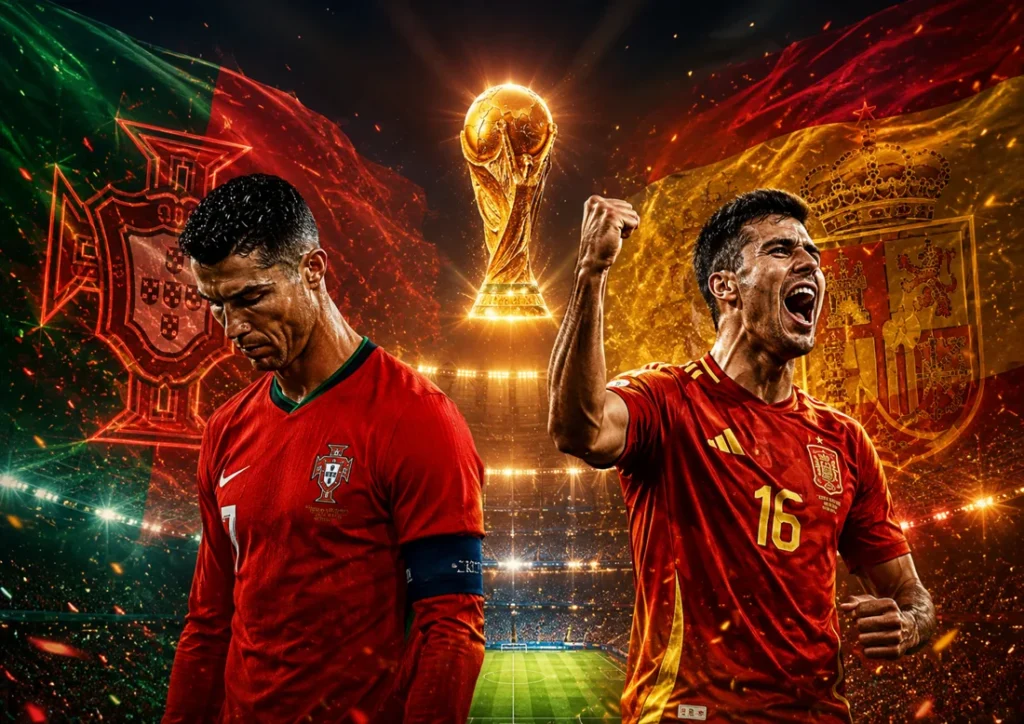
Portugal did not collapse. That matters.
Roberto Martínez’s side were compact for long periods and did one thing very well: they protected the space around Lamine Yamal.
Nuno Mendes, before going off injured, defended Yamal with real discipline. He did not jump too early. He matched the first movement, covered the outside lane and forced Yamal into slower touches.
That duel shaped the match.
Yamal still had flashes, including a free-kick that tested Diogo Costa, but he never fully took over. Portugal’s left side kept him under control for much of the night, and that made Spain work harder than they had against Austria.
The injury to Mendes changed the balance. It appeared to be a hamstring issue, and Portugal lost both an elite one-v-one defender and an important outlet in transition.
That does not mean Yamal played badly. It means Portugal defended him properly.
Spain have built a large part of their attacking identity around the fear he creates. Even when he does not deliver the final action, he bends defensive shapes. Opponents slide toward him. Midfielders cover behind the full-back. Centre-backs hesitate.
That opens space elsewhere.
This is why the wider story of Lamine Yamal as Spain’s new World Cup star still matters. Not every knockout game will be a highlight reel. Sometimes his value is tactical gravity.
Spain Controlled The Ending, Not The Whole Match
The key to this match was not that Spain controlled all of it. They did not.
Portugal had spells where they threatened to turn the game. João Félix offered movement from the left and central pockets. Bruno Fernandes tried to find shooting zones. Cristiano Ronaldo worked between the centre-backs, waiting for one clean delivery.
But Portugal were too careful for too long.
They had enough technical quality to hurt Spain, but not enough collective courage in the final third. Their midfield could circulate the ball, yet Spain’s rest defence kept the game in front of them.
Rodri and Pedri helped prevent counters from becoming waves. Pau Cubarsí and Aymeric Laporte rarely allowed Ronaldo to receive facing goal.
The result was a strange Portuguese performance: competitive, organised, but never truly free.
Spain, by contrast, grew into the final half-hour. Their substitutions gave them fresh legs and sharper movements. Ferran offered directness. Merino offered timing. Together, they changed the match.
The Heat, The Pauses And The Knockout Rhythm
This was also a World Cup match shaped by its conditions.
The hydration breaks mattered. They interrupted momentum. They gave both coaches time to reset pressing shapes and calm emotional spikes. The match rarely became a full sprint for more than a few minutes at a time.
That helped Portugal in the first half because they could breathe, regroup and stop Spain from building long pressure sequences.
It helped Spain later because it allowed De la Fuente’s team to keep control without turning the game frantic.
Tournament football often looks less glamorous than the idea of tournament football. The heat, the fatigue, the nerves and the fear of one mistake all pull teams toward caution.
Spain handled that part better.
Ronaldo’s World Cup Story Ends Quietly
For Cristiano Ronaldo, this was a cruel ending because it was so quiet.
There was no late header. No penalty. No dramatic equaliser. No final rescue act.
There was effort, there was presence, there was the familiar demand for one last ball into the box. But Spain denied him the stage.
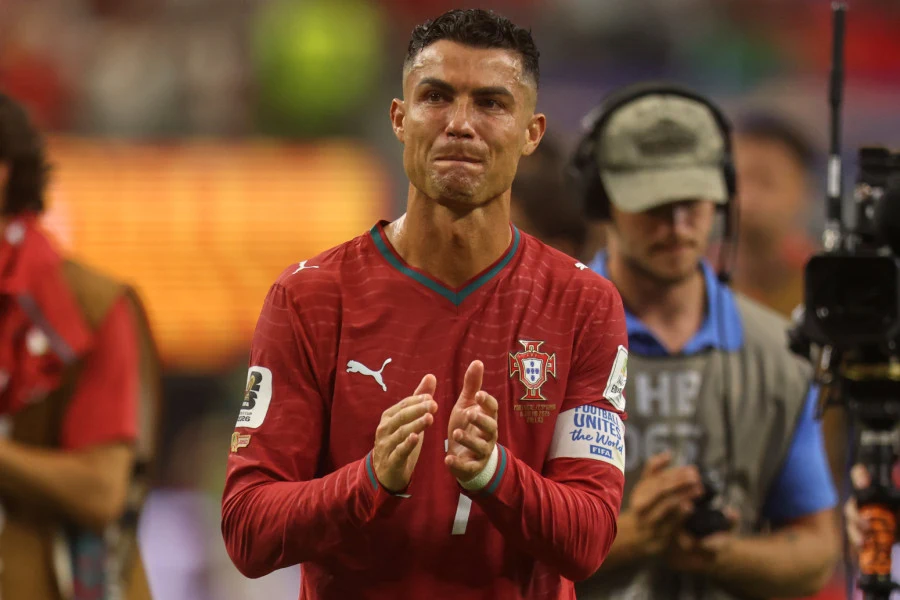
After the final whistle, the image was not Ronaldo celebrating another impossible escape. It was Portugal leaving the World Cup after defending well for 90 minutes and losing control of one decisive action.
If this was Ronaldo’s final World Cup match, it was not an ending built for cinema. It was an ending built by tournament football: tight margins, tired legs, one late lapse, one opponent who knew how to wait.
His Portugal legacy is secure. Euro 2016, the goals, the records, the longevity and the obsession with winning all belong to a different scale.
But the World Cup never gave him the perfect ending.
This one did not either.
Spain’s Unbeaten Run Reaches Historic Level
Spain’s win also carried a larger meaning.
La Roja are now unbeaten in their last 35 matches, equalling their longest ever unbeaten run from 2009.
The sequence is remarkable: 26 wins, nine draws and zero defeats.
It is also important because this Spain side is not simply copying the old one. The 2009 team was built around total midfield control. This version has more vertical speed, more wide threat and more ways to win.
They can dominate. They can press. They can use Yamal as a right-sided creator. They can lean on Rodri for control. They can win with Oyarzabal’s movement, Ferran’s directness or Merino’s timing from midfield.
Against Portugal, they showed another quality: patience under pressure.
That may matter even more in the quarterfinals.
Spain will now face either the United States or Belgium. Their road is becoming harder, but their tournament identity is becoming clearer. You can follow the wider knockout picture in Soccer Herald’s World Cup 2026 Round of 16 Results and Predictions.
What This Means For Portugal
Portugal leave with regret.
They had the structure to compete. They had the players to hurt Spain. They had the experience to manage a tight knockout match. But they did not have enough attacking bravery when the game asked for it.
The question now is not only about Ronaldo. It is about the next version of Portugal.
This squad still has elite talent across the pitch. Vitinha, João Neves, Nuno Mendes, Rafael Leão, João Félix, Bruno Fernandes, Bernardo Silva, Rúben Dias and Diogo Costa form a group that should not feel like the end of anything.
But the emotional centre of Portuguese football has been Ronaldo for so long that every major exit becomes a story about him.
That has to change.
Portugal’s next step is to become a team without needing every big moment to orbit one player. The talent is there. The structure needs to become braver.
Final Verdict
Portugal made Spain suffer, but Spain made Portugal defend for too long.
That was the difference.
This was not La Roja at their most dazzling. It was La Roja at their most adult. They accepted the heat, the pauses, the tight spaces and the frustration. Then Merino found the one movement Portugal could not stop.
Spain are in the quarterfinals. Portugal are out. Ronaldo’s World Cup story has probably ended.
And the 2026 World Cup has another last-minute winner for its growing collection of late drama.
Sources
Reuters: Merino strikes late as Spain edge Portugal to reach World Cup quarter-finals
FIFA: Last-gasp Merino sends Spain past Portugal
Flashscore: The champions are back — Spain find their groove heading into Portugal duel


