



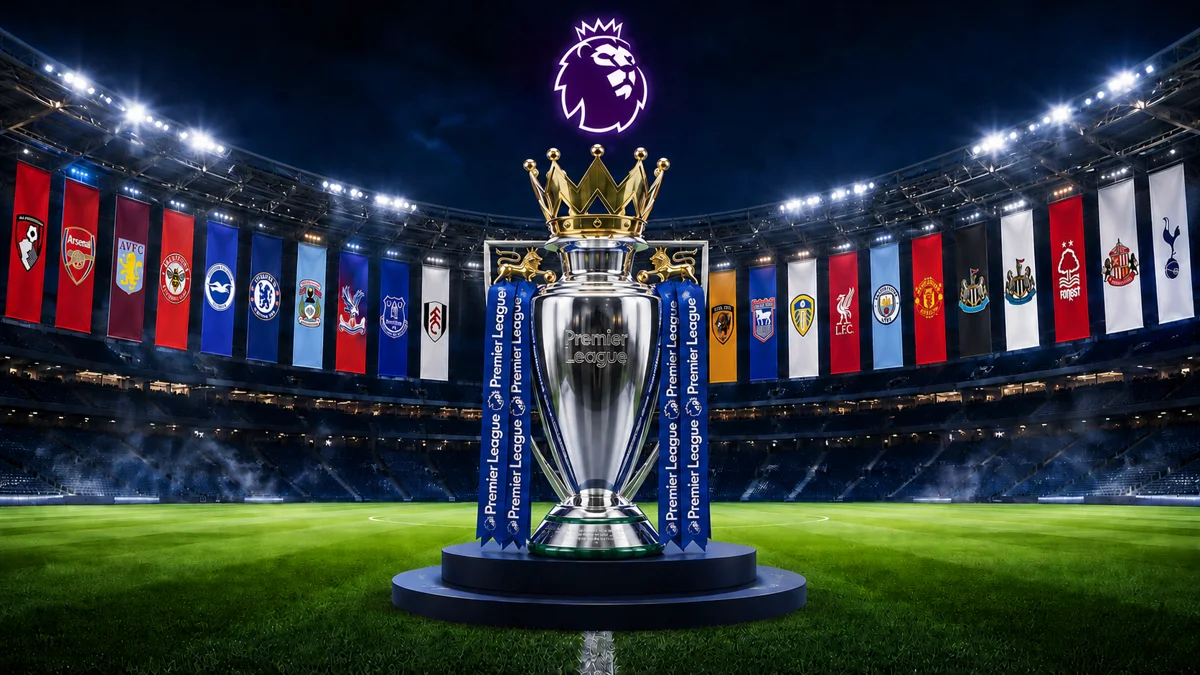
Premier League 2026/27 Hub: Teams, Fixtures & Guides
The Premier League 2026/27 season begins on Friday, August 21, with defending champions Arsenal hosting newly promoted Coventry City.
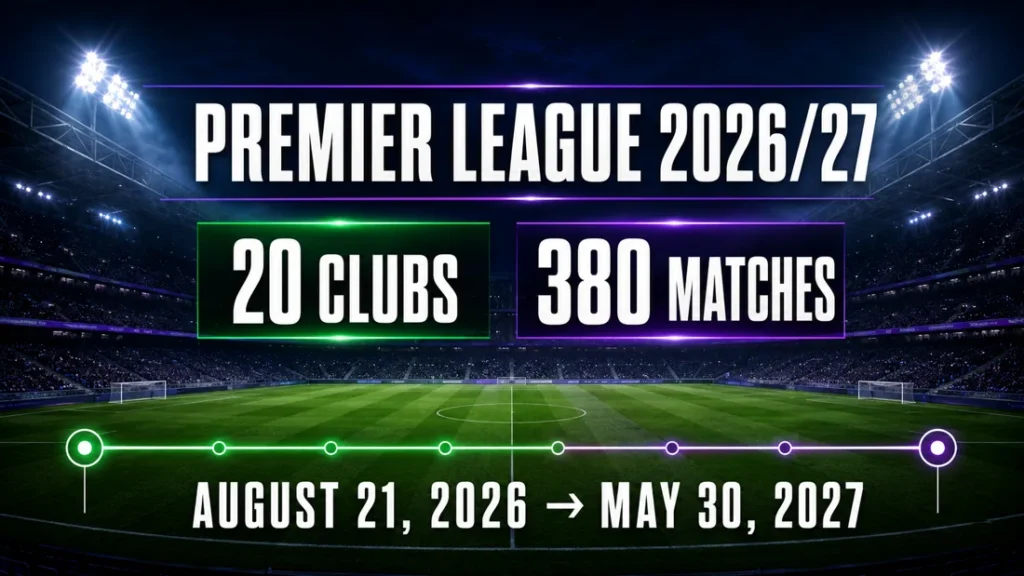
Over the following nine months, 20 clubs will play 380 matches in a campaign shaped by managerial changes, major squad rebuilds, new laws and the return of Coventry City, Ipswich Town and Hull City.
This Premier League 2026/27 hub brings together Soccer Herald’s season previews for every club, opening-weekend predictions, key dates, rule changes and the latest standings.
The page will be updated throughout the season as results reshape the title race, European battle and fight for survival.
Last updated: August 21, 2026
Quick Answer
The 2026/27 Premier League season runs from August 21, 2026, to May 30, 2027.
Arsenal begin as defending champions after winning the 2025/26 title with 85 points.
Coventry City, Ipswich Town and Hull City are the three promoted clubs.
The opening match is Arsenal vs Coventry City, while all ten Matchweek 1 fixtures are spread across four days.
Soccer Herald has published individual season previews for all 20 clubs, covering managers, transfers, tactics, key players and predicted finishes.
Premier League 2026/27 Quick Links
Latest Premier League table and standings
Premier League 2026/27 opening-weekend predictions
Premier League new rules for 2026/27
Latest Premier League news and analysis
Premier League 2026/27 Key Dates
The season begins on Friday, August 21, 2026.
The opening fixture places the defending champions against one of the promoted clubs, with Arsenal hosting Coventry City at the Emirates Stadium.
The final round will be played on Sunday, May 30, 2027, when all ten matches are scheduled to kick off simultaneously.
There are 33 weekend match rounds and five rounds scheduled during the week.
The calendar must also accommodate domestic cups and UEFA competitions during a season that begins shortly after the 2026 World Cup.
That compressed preparation could be particularly important during the opening weeks.
Several leading clubs welcomed important players back late, while teams with new managers had limited time to establish unfamiliar tactical structures.
Premier League Opening Weekend Fixtures
| Match | Date |
|---|---|
| Arsenal vs Coventry City | August 21 |
| Hull City vs Manchester United | August 22 |
| Everton vs Crystal Palace | August 22 |
| Ipswich Town vs Sunderland | August 22 |
| Nottingham Forest vs Leeds United | August 22 |
| Brentford vs Tottenham Hotspur | August 22 |
| Brighton vs Aston Villa | August 23 |
| Manchester City vs Bournemouth | August 23 |
| Newcastle United vs Liverpool | August 23 |
| Fulham vs Chelsea | August 24 |
The first weekend immediately introduces several of the season’s central stories.
Coventry return to the top flight after 25 years with the most difficult possible assignment. Hull welcome Manchester United, Ipswich face last season’s surprise package Sunderland and Liverpool begin the Iraola era at St James’ Park.
Read our Premier League Matchweek 1 predictions for tactical analysis and predicted scores for all ten matches.
Premier League 2026/27 Title Race
Arsenal begin as the team everyone must catch.
Mikel Arteta’s side combined the strongest defensive structure in the division with enough attacking improvement to finish seven points above Manchester City last season. The challenge now is turning one championship into a sustained period of dominance.
City are entering unfamiliar territory.
Enzo Maresca has replaced Pep Guardiola, while Rodri’s fitness and future have become central to the midfield rebuild. City still possess Erling Haaland and exceptional attacking depth, but their structure is changing.
Liverpool have also chosen a new direction under Andoni Iraola. Mohamed Salah has left, but Alexander Isak and Florian Wirtz give the attack enough quality to remain part of the title conversation.
Manchester United finished third after Michael Carrick transformed their season. Chelsea, meanwhile, begin again under Xabi Alonso with no European football and a squad capable of making a serious top-four push.
The title race is therefore built around one established champion and several major tactical resets.
The Race for Europe
The battle below the title contenders may be even more crowded.
Aston Villa enter the season as Europa League winners and Champions League participants. Bournemouth finished sixth, Sunderland seventh and Brighton eighth, while Brentford came close to securing the first European qualification in their history.
Crystal Palace are also balancing domestic football with Europe after winning the Conference League.
Tottenham have invested heavily in Roberto De Zerbi’s rebuild, while Everton believe greater stability can carry them towards the top half.
The line between the Champions League race and the middle of the table could be extremely narrow.
A strong run of six or seven matches may create European momentum. A difficult month could pull the same team towards the bottom half.
The Promoted Clubs
Coventry City return as Championship champions after collecting 95 points and scoring 97 goals.
Frank Lampard’s team earned promotion through attacking football, movement and aggression rather than caution. Their greatest challenge will be preserving that identity while defending against faster and more clinical opponents.
Ipswich Town secured an immediate Premier League return after finishing second with 85 points. Gary O’Neil has replaced Kieran McKenna and inherited a squad strengthened by more than £100 million of summer investment.
Hull City completed the promoted group through the playoffs. Sergej Jakirović has built around defensive organisation, physical strength and Oli McBurnie’s penalty-box presence.
All three have credible reasons to believe they can survive.
All three must also adapt quickly to a division in which mistakes are punished far more consistently.
Premier League 2026/27 Team Previews
AFC Bournemouth
AFC Bournemouth enter a new European era after finishing sixth and going 18 Premier League matches unbeaten.
Marco Rose inherits a team with intensity, confidence and Europa League football. The next challenge is handling a busier schedule without losing the aggression that produced the greatest league season in the club’s history.
Arsenal
Arsenal begin their title defence with the league’s strongest foundation.
Arteta still has Bukayo Saka, Declan Rice, Martin Ødegaard and Viktor Gyökeres, while the summer added further depth. The champions must now prove that last season was the beginning of an era rather than a single perfect campaign.
Aston Villa
Aston Villa have reached a higher standard under Unai Emery.
Europa League glory confirmed their transformation, but Morgan Rogers’ departure removes an important source of goals and ball progression. Ollie Watkins, Alejandro Garnacho and João Gomes will be central to keeping Villa among England’s European elite.
Brentford
Brentford’s next step is Europe.
Igor Thiago scored 22 league goals last season, but Brentford need greater attacking support around him. Mamadou Sangaré could give the midfield more control as the club attempts to turn another excellent campaign into its first European qualification.
Brighton & Hove Albion
Brighton return to European football after finishing eighth.
Fabian Hürzeler has a deeper defence and another exciting group of young players. Replacing Danny Welbeck’s 13 Premier League goals while managing a Thursday-Sunday schedule may determine whether Brighton remain in the top half.
Chelsea
The Xabi Alonso reset begins at Chelsea after a disappointing tenth-place finish.
Chelsea have no European schedule and therefore fewer excuses. Alonso must turn a talented squad into a coherent team capable of controlling matches and returning to the Champions League.
Coventry City
Coventry are back after 25 years.
Their 97 Championship goals revealed the ambition behind Lampard’s approach. Coventry should not abandon that bravery, but survival may depend on protecting central areas and recognising when Premier League matches require greater control.
Crystal Palace
Crystal Palace begin the Pierre Sage era as Conference League champions.
Sage has retained the back-three structure that suits the squad, reducing the need for immediate tactical revolution. The larger question is whether Palace can balance another European campaign with consistent league results.
Everton
Everton are ready to push towards Europe.
David Moyes has restored stability, while Hayden Hackney strengthens a midfield that should be more comfortable controlling possession. A European place remains ambitious, but Everton should no longer define success only through survival.
Fulham
Álvaro Arbeloa begins a new Fulham era.
Gonzalo García and César Palacios represent the move towards a younger squad. Arbeloa inherits a stable Premier League club, but he must add greater attacking threat without removing the balance established under Marco Silva.
Hull City
Hull City are back in the Premier League after winning the Championship playoffs.
Jakirović has built a pragmatic team around physical strength, defensive organisation and McBurnie’s presence. Hull may not dominate many matches, but their directness and resilience can keep them competitive.
Ipswich Town
Ipswich return under Gary O’Neil with one of the summer’s largest squad rebuilds.
The investment has added top-flight experience, physical power and tactical flexibility. O’Neil must connect the new pieces quickly enough to prevent another season from becoming a prolonged survival battle.
Leeds United
Leeds are attempting to turn survival into stability.
James Trafford, Harry Wilson and Tarik Muharemović address clear weaknesses. Ethan Ampadu remains the tactical reference point, while improved away form could move Daniel Farke’s team closer to the top half.
Liverpool
Andoni Iraola begins a new Liverpool era after last season’s fall to fifth.
Salah’s departure ends one attacking cycle, but Isak and Wirtz give Liverpool a new creative core. Their ceiling remains extremely high if Iraola can establish defensive balance around that attacking talent.
Manchester City
Manchester City enter life after Guardiola with Maresca attempting to provide continuity.
Rodri’s situation has accelerated the midfield rebuild, with Elliot Anderson becoming increasingly important. City still possess enough quality to challenge for the title, but their control can no longer be taken for granted.
Manchester United
Manchester United begin their first full season under Carrick after finishing third.
Bruno Fernandes remains the leader of a rebuilt midfield, while Benjamin Sesko must build on an encouraging first campaign. United now have momentum, but the next step is proving they can sustain a title challenge.
Newcastle United
Newcastle are rebuilding under Matthias Jaissle after finishing 12th.
The departures of Bruno Guimarães, Sandro Tonali and Anthony Gordon removed much of the previous team’s identity. Jaissle must establish a younger core while restoring the intensity that once made St James’ Park one of the league’s hardest away trips.
Nottingham Forest
Oliver Glasner brings a new structure to Nottingham Forest.
His 3-4-3 places greater responsibility on the wing-backs and should give Forest a clearer defensive organisation. The transition threat remains dangerous, but the team must become more reliable when asked to control possession.
Sunderland
Sunderland return to the Premier League with European football after an extraordinary seventh-place finish.
Régis Le Bris has retained the compact structure and young core behind that success. Repeating seventh would be remarkable, but another top-half finish would confirm that Sunderland’s rise is sustainable.
Tottenham Hotspur
Tottenham begin a major reset under Roberto De Zerbi.
Sandro Tonali and Mateus Fernandes give De Zerbi the midfield quality required for his possession game. The squad has changed dramatically, and early inconsistency is possible, but the long-term tactical fit is compelling.
Premier League New Rules for 2026/27
The season also introduces changes involving injury stoppages, delayed restarts, goalkeeper time-wasting, substitutions and VAR communication.
Players receiving treatment after play is stopped will generally have to remain off the field for at least one minute.
Referees can use visible countdowns when teams delay throw-ins, goal-kicks or goalkeeper restarts. VAR procedures have also been adjusted to improve clarity and reduce unnecessary delays.
Our full Premier League new rules guide explains every major change and how it could affect matches.
What Will Define the 2026/27 Season?
The first question is whether Arsenal can defend the title.
Winning changed their status. They are no longer chasing Manchester City. They are the standard against which City, Liverpool, United and Chelsea will be measured.
The second question concerns the new managers.
Maresca, Iraola, Alonso, De Zerbi, Jaissle, Glasner and Arbeloa are all attempting to reshape significant Premier League clubs. Some have inherited stable foundations. Others are beginning almost from zero.
The third question is how European football affects the middle of the table.
Bournemouth, Sunderland, Brighton and Crystal Palace must protect domestic consistency while playing additional matches. Aston Villa face the same challenge at Champions League level.
The final question belongs to the promoted clubs.
Coventry, Ipswich and Hull have all invested in survival, but recent Premier League seasons have shown that promotion does not automatically lead to relegation.
The margins between the bottom half and the European places may be smaller than ever.
Premier League 2026/27 FAQ
When does the Premier League 2026/27 season start?
The season begins on Friday, August 21, 2026, with Arsenal hosting Coventry City.
When does the season finish?
The final Premier League match round will be played on Sunday, May 30, 2027.
Who are the defending Premier League champions?
Arsenal are the defending champions after winning the 2025/26 title with 85 points.
Which clubs were promoted?
Coventry City won the Championship, Ipswich Town finished second and Hull City earned promotion through the playoffs.
How many teams are in the Premier League?
The Premier League contains 20 clubs. Every team plays 38 league matches.
Where can I follow the latest standings?
The Soccer Herald Premier League table will track positions and results throughout the campaign.
Final Verdict
The Premier League 2026/27 season begins with more tactical change than certainty.
Arsenal have the crown. Manchester City are adapting to life after Guardiola. Liverpool, Chelsea, Tottenham, Newcastle, Nottingham Forest and Fulham all have new managerial projects.
Several clubs must balance Europe with domestic ambition, while three promoted teams enter the division believing survival is realistic.
This hub will follow every stage of the campaign, from the opening weekend to the final title, European and relegation decisions on May 30.
Sources
Premier League — All 380 fixtures for the 2026/27 season


